packaging of DNA is accomplished with specialized proteins that bind and fold. This generates a series of coils and loops that provide high levels of organization
bacteria have genes in a circular DNA molecule
The full set of human chromosomes contain 3.2 x 10^9 base pairs
chromosomes can be identified with dyes that bind to A-T pairs versus G-C pairs, which produce predictable bands.
The Regulation of Chromosome Structure
cells can alter chromatin structure to expose localized regions of DNA, which allows access to specific proteins.
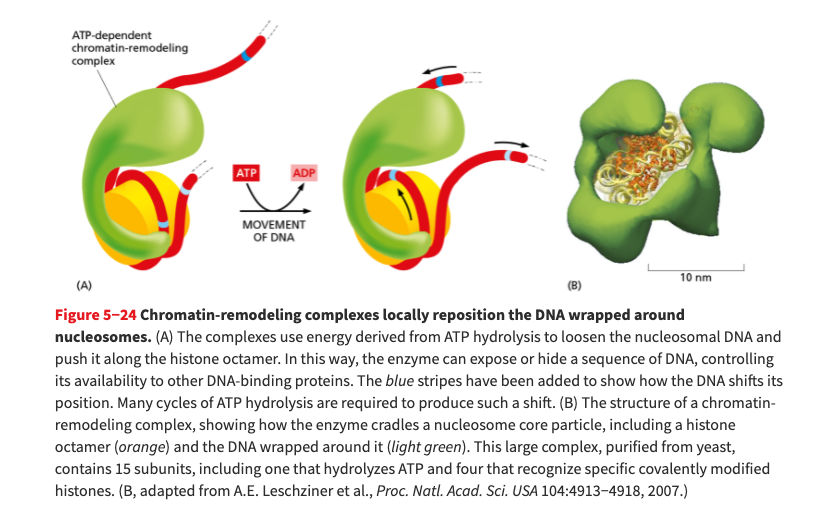
ATP-dependent chromatic-remodeling complexes use ATP hydrolysis to change the position of DNA wrapped around nucleosomes
Histones, which control how DNA is wrapped, can also be modified by enzymes
Most cells only express about half the genes they contain
Having two expressive X-chromosomes is lethal, so early in embryonic development one of them gets condensed into heterochromatin. Different X chromosomes sometimes have different expressions, e.g. in calico cats
When a cell divides, it can pass on histone modifications, chromatin structure, etc. This “cell memory” is critical for the establishment and maintenance of different cell types